
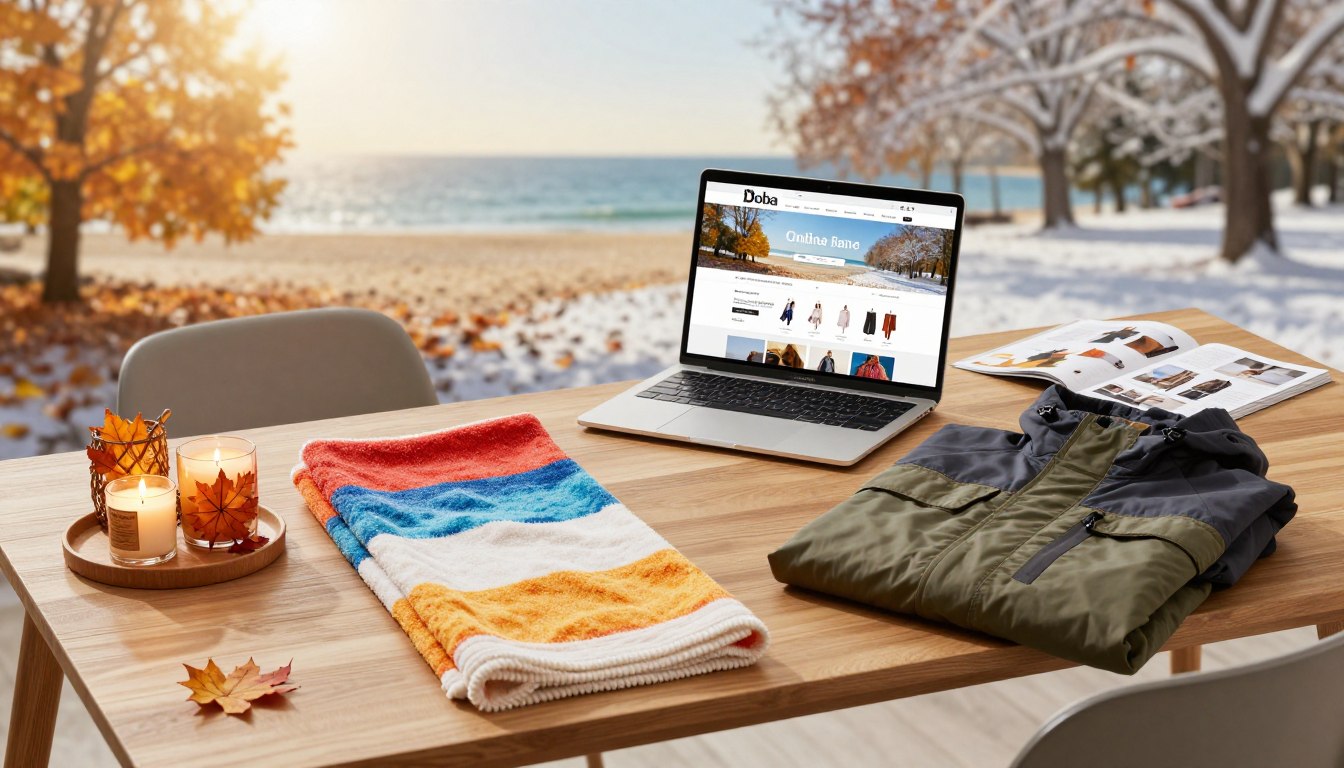
The global dropshipping market is expected to hit $476.4 billion by 2026. This growth highlights the importance of seasonal products. A product tied to a holiday can attract new customers as the seasons change.
There are three key categories for this strategy. These include seasonal home décor, outdoor items, and wellness products. For example, Valentine’s Day items can lead into Easter and beyond.
Outdoor products change with the weather. From patio gear to winter clothes, there’s a need for all seasons. Wellness products are great for birthdays and back-to-school, supporting self-care and seasonal changes.
Success in these categories isn’t guaranteed. Profit depends on many factors like demand and competition. I must also focus on product quality and customer feedback.
Planning ahead is crucial. Researching suppliers and preparing marketing early helps. This way, I’m ready when demand spikes.
This guide is a Doba dropshipping tutorial. It shows how to test seasonal products without big inventory costs. However, dropshipping still requires customer service and financial planning.
Next, I’ll compare these categories and explore Doba for sourcing. I’ll also share how to keep seasonal offers fresh all year. This will help me build skills in product research and digital marketing, supporting a stronger income.
3 Seasonal Products to Sell Online Year-Round | Doba Dropshipping Tutorial
When I start with seasonal products, I do my research first. I open my Doba account and check the product categories, supplier details, and more. This helps me avoid risks before creating a product page.
Doba helps with finding and fulfilling products, but no listing is a sure profit. I use it as a tool for research and sourcing. I check demand, customer needs, costs, and supplier reliability before choosing. This Doba dropshipping tutorial shows the same practical approach.
1. Seasonal décor and celebration items can sell across many events. I look for reusable décor, neutral party supplies, and customizable celebration products. A versatile table display for birthdays, graduations, weddings, and baby showers has more sales potential than a single holiday item.
I carefully review product photos. Customers need to see size, color, materials, and use cases. Clear images and simple descriptions help avoid confusion. I avoid items with unclear measurements or narrow appeal.
2. Outdoor, travel, and weather-based products can sell based on the climate. Summer products might appeal to Florida customers, while winter gear suits Colorado shoppers. I consider the buyer’s location, lifestyle, and travel habits for promotions.
Portable ice packs, cooler accessories, camping stoves, and hand warmers solve clear problems. I compare shipping coverage and delivery speed for each item. A product popular in summer may need a new audience in winter.
3. Giftable wellness, beauty, and home-comfort products are great for birthdays, holidays, care packages, and everyday needs. I check gift appeal, repeat-purchase potential, packaging, reviews, and product quality. Claims about health, safety, or performance must be reliable.
To compare products, I record the supplier cost and a realistic selling price. I calculate the possible gross margin before advertising, payment processing, platform fees, refunds, and support costs. My basic formula is: selling price minus total costs equals profit per order.
I compare ratings, customer feedback, image quality, shipping speed, delivery coverage, and inventory levels. I study competing listings to see how other stores present similar items. When possible, I order samples. Firsthand testing helps me judge the packaging, materials, and customer experience.
Seasonal inventory still needs close attention in a dropshipping store. Supplier stock can change without much warning, and shipping delays may appear during busy periods. I keep backup products or alternative suppliers for important campaigns.
I keep my store focused instead of filling it with unrelated products. A clear product range makes branding, content creation, customer service, and store updates easier. Once I source and compare each item, I can check whether the opportunity can stay profitable beyond its original season.
How to Choose Profitable Seasonal Products for Year-Round Product Selling
I don’t just pick products based on their popularity. A product that’s only in demand for a short time might not be worth it. It’s better to choose something that solves a problem even after the initial excitement fades.

I use a year-round product scorecard to evaluate ideas. I look at demand, usefulness, purchase intent, and more. This helps me see if a product is a good long-term choice.
Before spending on ads, I check if the product is durable and of good quality. I also consider if it can be bundled or upsold. This helps me compare it to fleeting trends.
A product that’s good all year has steady demand. Products with short spikes in demand might look good on sales charts but can drop sharply. I study what drives each purchase to understand this.
I ask, “Why would someone buy this in every season?” For example, décor can be for holidays, birthdays, and home refreshes. Outdoor products can be for vacations, sports, and camping. Giftable items can be for holidays, milestones, and self-care.
Having a clear niche helps me focus more than chasing viral products. A focused store can build trust with its audience. This trust can lead to more stable growth.
Profit isn’t just about revenue. I use a formula to estimate profit: estimated selling price − product cost − shipping − transaction fees − advertising costs − refunds − operating expenses = estimated profit.
I test each product with a small campaign before spending more. I watch conversion rates, average order values, and more. These numbers show if buyers value the product beyond its season.
Bundles can increase demand and order value. I pair seasonal items with practical ones. This makes the offer useful even after the main season ends.
I avoid misleading ads, fake products, and unsafe items. Clear descriptions and reliable delivery protect customers. This builds a strong base for long-term sales.
Seasonal Marketing and Online Store Strategies for Year-Round Sales
I plan sales all year with a 12-month calendar. It shows when shoppers are ready to buy. I mark holidays like Valentine’s Day and summer travel.
My calendar also includes daily needs like birthdays and home organization. These events help reach the right customer. They give one product more chances to sell.
I create a fresh angle for each campaign. A home item might be a holiday gift or a party accessory. The message changes, not the product.
My online store stays organized all year. It has simple navigation and clear product details. It’s easy to use on phones, too.
I use dedicated landing pages for each event. This keeps the main store familiar. Each page offers a focused path to buy.
My content plan includes seasonal guides and gift ideas. I use videos, reviews, and articles to build interest. This helps shoppers understand the product better.
Email reminders help customers shop on time. I send messages for early research and last-minute orders. This reduces stress and encourages returns.
I start campaigns early to meet demand. I check inventory and plan promotions carefully. This saves money and avoids problems.
When a season ends, I refresh the campaign. I update images and copy. A winter gift can become a spring tool with a small change.
I track sales to see what works. This helps me test new ideas in future campaigns. It’s all about finding what attracts buyers.
Fulfillment is key for every promotion. I share delivery dates and watch inventory. If there’s a delay, I contact customers quickly.
Year-round ecommerce sales need constant effort. I don’t just put a product online and wait. A well-planned marketing system helps earn trust and grow a business.
Conclusion
Seasonal products can help a year-round online business thrive if you plan ahead. Items like seasonal décor, outdoor gear, and wellness products meet different needs all year. It’s key to find products that are versatile, have good supplier support, and offer fair shipping times.
Doba can aid in finding suppliers and managing orders. But, it’s crucial to check each product, read customer reviews, and offer excellent service. Picking a specific niche helps you focus and plan better.
Start by making a 12-month marketing plan and test a small campaign. Analyze sales, profits, and customer feedback to improve. Only grow your business when the numbers justify it. Each test helps you learn more about your customers and how to improve your store.
Building a year-round business takes time and effort. But, with steady improvement, you can achieve financial freedom and personal growth. Start researching now to make informed choices before the next selling season hits.



Leave a Reply