
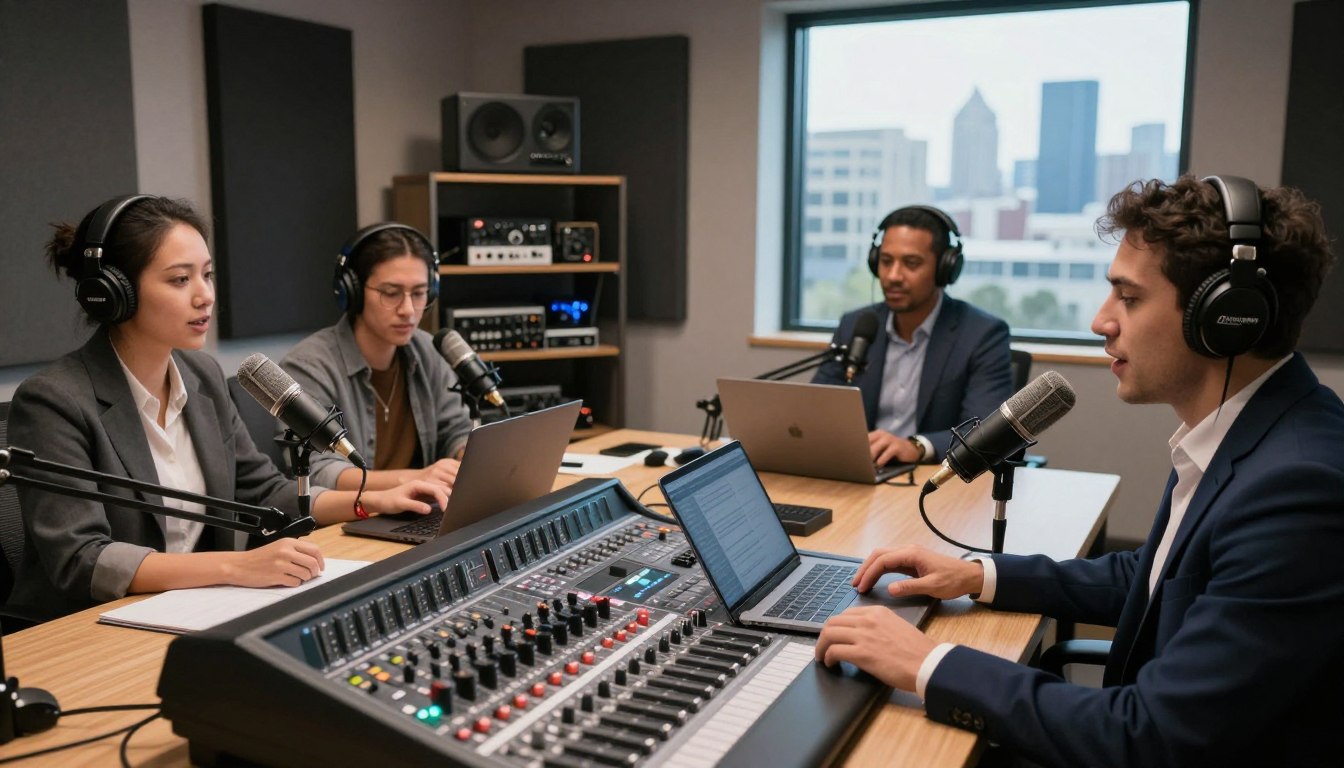
Did you know that creators who repurpose one long interview can increase listener and viewer reach by more than 300%? That realization changed everything for me.
I started using Riverside for podcasts when I wanted to turn a side-hustle interview into income. At first, I needed reliable audio. But I found so much more. Riverside for podcasts is a virtual podcast studio that records each guest locally. This gives near-studio audio quality and separate tracks for every participant.
On my first session, the relief was immediate. I got crystal-clear sound, no awkward internet drops, and 4K video that made short clips look polished. That moment convinced me Riverside for podcasts is a professional podcasting platform. It’s one of the best podcast recording platforms for creators building a brand.
Because podcasts on Riverside capture high-quality local files, I could export a full episode. I could also make a YouTube video and cut engaging shorts for TikTok and Instagram — all from a single recording. Those podcast recording tools sped up my workflow. They helped me grow bookings, newsletter signups, and sponsorship conversations.
I share this as a mentor who’s been in the same shoes: if you want to scale content without sacrificing quality, Riverside for podcasts and webinars makes multi-format publishing simple. The platform’s browser-based guest links and integrations mean less setup, more creation, and a clearer path to side income and audience growth.
Why Choose Riverside for Podcasts, Webinars & Shorts
I’ve tried many tools, and Riverside is the best. It makes every session feel like studio time. This means I get clear audio and video, making my episodes look professional.
Riverside for podcasts offers separate local tracks and 4K capture. It also records at high-bitrate, saving me hours in editing.
For webinars, Riverside is my go-to for a reliable event. It supports live streaming to YouTube, Facebook, LinkedIn, or custom RTMP. This makes my webinars feel like live TV, without the hassle.
Interactive features are key for my audience. I use Riverside’s live chat, Q&A, and guest management. These features keep my audience engaged and help me gather questions.
Riverside is more than a webinar platform; it’s a content powerhouse. One recording can be a podcast, a video, and dozens of shorts. I also get transcripts for show notes and social captions, boosting my content’s value.
It’s easy to invite guests with a browser link and record without installs. Riverside’s built-in markers and highlights make editing faster. It’s like a virtual meeting room for creators.
For those looking to make money, Riverside is the right choice. It helps me capture high-quality sessions that lead to sponsorships, course signups, and consulting leads. Its reliability boosts my brand’s confidence.
Recently, a webinar with smooth recording and attendee questions led to sales. I turned that session into shorts and posted them everywhere. This strategy helped my signups grow. That’s why I call Riverside a top choice for webinars and a platform that supports creators.
How to Record Professional Podcasts, Webinars & Shorts on Riverside
I start by setting up in a quiet room. I use a Rode or Shure USB/XLR mic. Before guests arrive, I check the internet and lighting.
I make a simple episode outline and a shot list. This helps me quickly find good moments for shorts. It also saves time when editing.

Signing up for Riverside is easy. I create a studio and choose local recording options. I also pick separate tracks for each guest.
For YouTube, I set the resolution to 4K. For live events, I enable live streaming and set up co-hosts to manage chat.
I invite guests with a link. Most join without any hassle. I ask them to use headphones and test their levels.
During recording, I mark important moments. I also use the Clips feature for standout soundbites.
After recording, I download the audio and video. I edit in Descript or Adobe Premiere and fine-tune audio in Audacity.
I create show notes and captions from the transcript. This makes the content SEO-friendly.
To make shorts, I select 30–60 second clips. I add captions and thumbnails with Canva. I size the videos for different platforms.
I use the transcript for social media posts. I add timestamps for easy access to highlights.
For publishing, I upload the podcast to Libsyn or Anchor. I publish long-form video on YouTube. Riverside makes exporting easy, but manual uploads give me control.
I keep all files organized in a reusable folder structure. This makes my workflow efficient.
My productivity tips include batch-recording episodes and using a standard intro and outro. I also use a template in my software. This makes Riverside a reliable tool for podcasting.
Riverside for Podcasts, Webinars & Shorts
Switching to a dedicated platform was a game-changer for me. It reduced technical issues and improved audio quality. Riverside acts like a top-notch recording studio, capturing each track with precision. This makes editing a breeze, not a stressful task.
Recording podcasts with riverside made remote guests sound like they were in the room. The ability to export separate tracks and have reliable backups sped up editing. This is why many creators choose riverside podcasting solution and hosting for their audio needs.
For webinars, riverside’s live tools keep the audience engaged. It supports multiple guests, live Q&A, and ticketed events. This allows hosts to monetize and share recordings later, creating evergreen content.
Short-form content needs to be clear and concise. I use riverside to create tight clips from longer interviews. This way, I can share high-quality videos on platforms like TikTok and YouTube Shorts.
Here are three scenarios where riverside shines: solo entrepreneurs, coaches, and companies. Each can use riverside for podcasts, webinars, and shorts. This versatility helps reach more people and grow audiences.
Pricing is important. Riverside offers plans that fit different needs. Before choosing, consider what you need in terms of resolution, cloud recording, and team seats.
Security and uptime are crucial for paid events. Riverside ensures secure session links and reliable recording. This gives peace of mind to professionals and protects their income.
Using riverside has boosted my productivity and reach. If you want a streamlined workflow, explore riverside’s features. It can help you grow your audience and increase your income.
Conclusion
I started using Riverside for easy recording of interviews and webinars. It felt like a virtual studio that saved me time. Local-track recording and clear audio made it easy for guests. One session turned into a podcast, webinar, and short videos.
Riverside is great for creating short videos and repurposing content. Its live streaming features and easy exports help you reach more people. It’s perfect for freelancers and side hustlers, helping you grow your audience and income.
Try Riverside with a simple plan: set up a studio, practice with a guest, and use editing tools like Descript or Adobe Premiere. Batching recordings saved me hours. For quick, polished content, check out this guide: create high-quality content in minutes.
Start small, stay consistent, and aim to publish clips after each session. I went from nervous amateur to consistent creator on Riverside. Each recording brings you closer to financial and personal growth. So, hit record and start.


Leave a Reply