
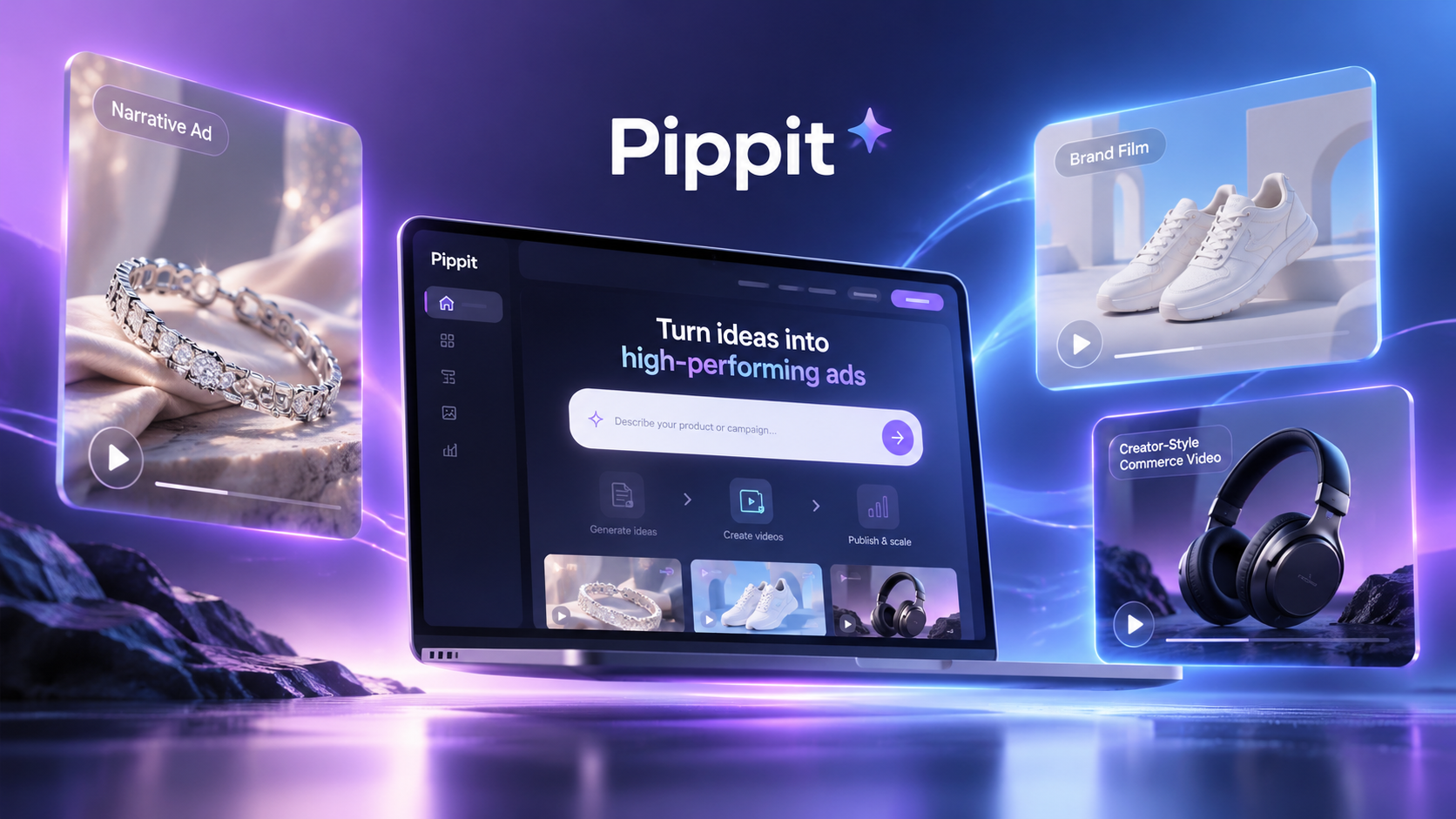
A limited-time offer from Pippit AI priced marketing video creation at $0.12 per second. That price changed how I viewed AI advertising. Instead of planning one costly shoot, I could test more ideas, compare hooks, and learn what could connect with real customers.
I made 3 types of AI ads with Pippit AI narrative ads, brand films, and UGC. My goal was to explore how artificial intelligence ads and AI marketing could support a small business. They would not replace the human work behind good marketing. Strategy, product knowledge, and judgment still matter.
I chose Pippit AI because its tools make AI marketing more practical. Through its Marketing Studio, I shaped AI video ads for a product, target audience, and clear brand tone. The process showed where AI content creation saves time and where careful review remains essential.
Before creating Pippit AI ads, I prepared the basics: a product name, strong product images, and simple selling points. Those details gave each concept direction. Then, I tested AI storytelling ads, polished brand films, and user generated content for social campaigns.
This experiment is not about pressing a button and getting perfect video advertising. It is about building a repeatable starting point for ad campaigns, side businesses, and marketing automation. In the next sections, I will share what I learned while creating these three formats. I will also explain how brand films & UGC can help entrepreneurs produce more content with fewer resources.
I Made 3 Types of AI Ads with Pippit AI Narrative Ads, Brand Films & UGC
I started with one product, a clear audience, and one goal: create short ads for my digital marketing plan. Pippit’s Creator Style Commerce workflow let me enter the product name, upload product images, and add key selling points. This gave the AI advertising platform enough context to shape each concept.
The product name set the scene and told Pippit AI technology what the item was and who might need it. The images protected visual consistency, so the product looked familiar in every ad. My selling points guided the benefits, message, and call to action.
I chose a specific audience before generating anything. A clear audience shaped the tone, pace, and language. It supported personalized ads and made the personalized ad campaigns more focused.
My first direction used narrative advertising. I built it around a common problem, product discovery, and clear resolution. These narrative advertising solutions made the ad feel like a short story, not a feature list.
The second direction focused on Pippit brand films. This style gave more space to mood, identity, and emotion. It suited brand storytelling and innovative brand storytelling by placing the product within a wider lifestyle.
The third direction used Pippit UGC. These UGC ads felt casual and direct, like a customer sharing a useful recommendation. User generated content ads can show a product demo, daily use case, or quick response to a common need.
Each format showed a different strength in artificial intelligence in marketing. The narrative concept built interest. The brand film shaped emotion, while the UGC concept created a closer viewer connection.
I reviewed the first scripts before making changes. I checked product details, prices, features, and claims against the real offer. This mattered because polished video ad creation tools can overstate a benefit or miss an important detail.
I refined every claim that felt broad or unclear. I wanted the message to reflect the real product experience, without promising too much. This review made automated ad creation feel more responsible and useful.
Pippit ad solutions gave me several ways to adjust tone and structure. I could guide the message toward direct selling, warm education, or emotional appeal. These AI advertising tools made it easier to test AI driven advertising strategies without starting from a blank page.
The workflow showed how AI marketing solutions can support real creative judgment. Pippit’s AI advertising solutions improved speed and structure, while I remained responsible for accuracy and trust. That balance matters when using artificial intelligence advertising for a growing business.
I could see how UGC AI ads, narrative ads, and brand films might serve different campaign stages. Pippit AI marketing services can support that mix, from early concepts to polished short-form content. Each version helped me explore the product’s story and sales message.
Creating Narrative Ads, AI Brand Films, and AI UGC Ads with Pippit
I began with a clear product brief, strong product photos, brand colors, a logo, and a short description. This gave my AI video advertisement a strong base. On the Pippit AI ad platform, I chose a video model, uploaded media, and entered a creative prompt.
I chose each format for its channel. A 9:16 video fits TikTok, Instagram Reels, and Shorts. A 1:1 video works well in social feeds.
A 16:9 video suits YouTube, websites, and ecommerce pages. These formats helped me build practical AI driven ad campaigns without rebuilding each asset.

For narrative ads for digital marketing, I built a short story around a real customer need. The opening showed the problem, the middle introduced the product, and the close shared a useful outcome. A clear call to action made my AI narrative advertising easy to follow.
For brand films for online campaigns, I focused on mood and meaning. I requested visual atmosphere, steady pacing, brand colors, and memorable scenes. This digital storytelling supported brand storytelling through AI and kept the product central.
Pippit AI brand films can help small teams express brand values without a large production crew. They also support innovative AI marketing through focused visual stories.
For user generated content in advertising, I used a relaxed voice. The script introduced the product, showed its place in daily life, and ended with a simple invitation. This style supported user generated content marketing and made the AI powered ads feel genuine.
Pippit supports AI driven ad creation through prompts, templates, scripts, voiceovers, and visual controls. I reviewed each result for product accuracy, voice quality, captions, transitions, and timing. I checked that the logo stayed clear and the text stayed readable on a phone screen.
The platform helped me explore AI video ad creation with realistic, 3D anime, and operatic avatar styles. I could create a twin avatar from my photo and use English, French, Japanese, and Simplified Chinese. This AI innovation made personalized AI marketing campaigns easier to adapt for different audiences.
I created versions with new openings, benefits, music, and calls to action. One version used a six-second hero concept, while another used a 15-second lifestyle story. A 30-second motion ad allowed rapid cuts and deeper product detail.
This AI ad creation process supported personalized AI ad campaigns and helped me test effective AI ad strategies.
The same workflow can turn one product image into three creative directions, as shown in this single-photo AI ad workflow. I could create a hero product ad, a lifestyle ad, and a motion ad without three separate shoots.
These tools show how artificial intelligence marketing and AI video advertising are changing content creation. AI advertisement solutions can cut production time while supporting personalized marketing. With the right brief, AI in branding can strengthen consistency across social posts, landing pages, and paid campaigns.
I treated each export as a testable asset. I named files by product, concept, aspect ratio, and length. I placed each version in its own folder and compared impressions, CTR, CVR, CPA, watch rate, and view percentage.
This organization made my effective AI ad strategies easier to manage. It also supported video advertising solutions for organized digital ad campaigns.
For me, advertising technology and an ad tech platform work best when they support judgment, not replace it. The goal is not to publish every result; it is to use artificial intelligence in advertising with care. That care helped me improve ideas, keep messages useful, boost marketing with AI ads, and protect the brand’s human voice.
Conclusion
I made 3 AI ad types with Pippit AI: narrative AI ads, brand films with AI, and UGC video advertising. Each format showed me a different path to effective brand storytelling. Pippit AI ad creation made AI in advertising practical.
It supported creative AI advertisement concepts, personalized video ads, and user generated content. Still, strong AI powered marketing campaigns need more than speed. They need clear positioning, accurate product details, and a real understanding of the audience.
With the Pippit AI platform, I adapted one idea into vertical, widescreen, and square video ads. That flexibility supports social media, ecommerce pages, and paid campaigns. It also makes Pippit AI marketing useful for brand film production, digital storytelling with AI, UGC marketing, and personalized advertising campaigns.
These AI advertisement types support creative advertising strategies, AI marketing strategies, and intelligent advertising strategies without starting from scratch.
My advice is simple: begin with one product, a few credible selling points, and one clear goal. You might test a new hook, improve product awareness, or explore Pippit UGC advertising. Then review every asset for visual accuracy, brand consistency, accessibility, disclosure needs, and truthful claims.
AI ad technology can support AI ad creation, but human judgment must guide every final decision.
For me, the best use of artificial intelligence in advertising is not replacing creativity. It reduces production friction, so I can test, learn, and improve. With Pippit ads, creative branding, audience feedback, and careful measurement, entrepreneurs can build useful, honest AI marketing campaigns.
That is the real promise of AI powered storytelling ads, AI video advertising, and innovative AI advertising solutions.


Leave a Reply